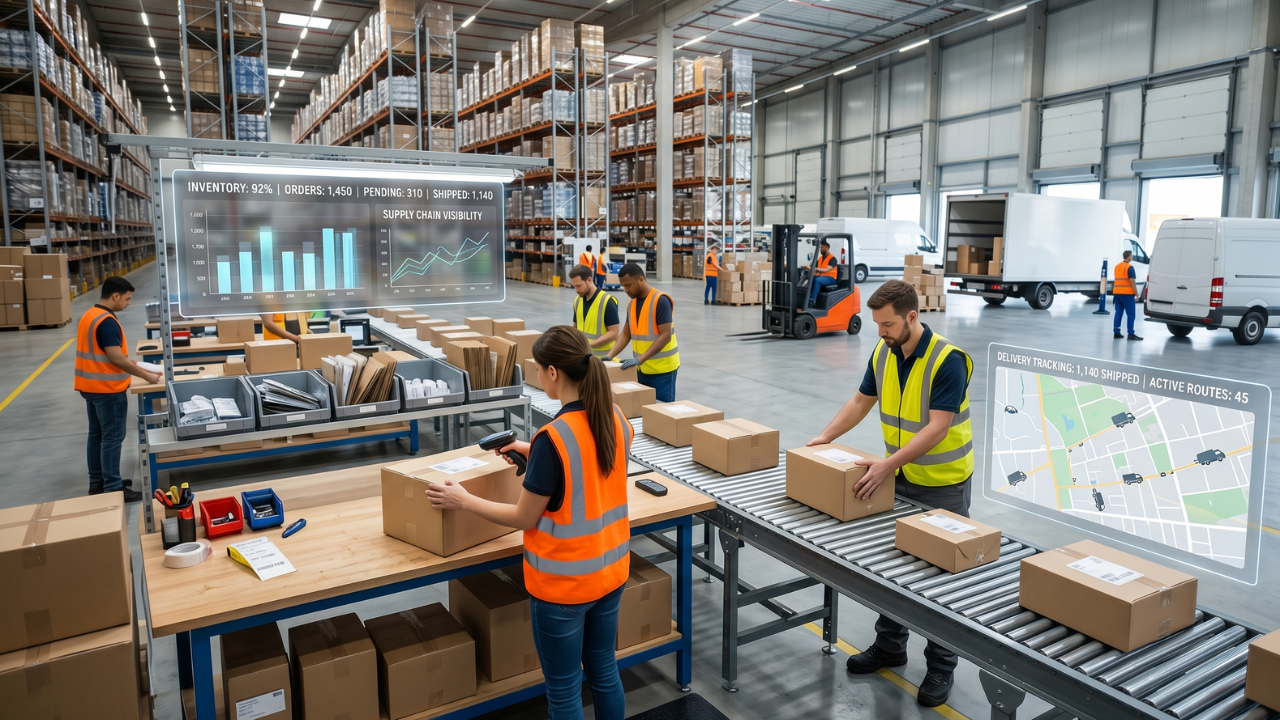
Integrated fulfillment has become one of the most important operating models for modern online businesses, retailers, wholesalers, and growing brands. When orders, inventory, warehouses, shipping partners, returns, and customer updates are handled in separate systems, teams often struggle to understand what is happening across the supply chain. A product may appear available on one platform but be out of stock in the warehouse. A shipment may be delayed without the customer service team knowing why. A return may arrive without the inventory team receiving a timely update. These gaps create confusion, higher costs, and poor customer experiences.
Integrated fulfillment solves these problems by connecting the major parts of the order journey into one coordinated workflow. Instead of treating fulfillment as a simple warehouse function, it brings together order management, inventory data, warehouse operations, carrier selection, tracking updates, returns processing, and reporting. The result is better supply chain visibility and stronger operational control.
For brands that want to build more reliable operations, integrated fulfillment is not just a logistics improvement. It is a smarter way to manage the entire customer delivery experience. Readers can also explore Almawadahit.com for more technology and business-focused updates.
What Is Integrated Fulfillment?
Integrated fulfillment is the process of connecting order capture, inventory management, warehouse activity, packing, shipping, tracking, and returns through shared systems and coordinated workflows. In a disconnected model, each department or partner may use its own tool, spreadsheet, or manual process. In an integrated model, the same order data moves across systems automatically, helping teams make decisions based on accurate and current information.
For example, when a customer places an order, an integrated fulfillment setup can automatically check available inventory, send the order to the right warehouse, generate pick and pack instructions, select a shipping method, update tracking information, and adjust stock levels. This creates a smoother process from purchase to delivery.
This is especially valuable for businesses managing e-commerce fulfillment, because online customers expect fast shipping, accurate tracking, and clear communication. When fulfillment systems are connected, businesses can respond faster and reduce the mistakes that often happen when teams rely on manual handoffs.
Why Supply Chain Visibility Matters
Supply chain visibility means having a clear view of products, orders, inventory, shipments, delays, returns, and performance data at every important stage. Without visibility, businesses often operate reactively. They discover stock problems after customers place orders. They notice shipping delays only after complaints arrive. They struggle to identify where bottlenecks are happening because information is scattered across different systems.
With better visibility, managers can see what is happening earlier and act with more confidence. They can monitor inventory levels, identify slow-moving products, track warehouse productivity, compare carrier performance, and spot exceptions before they become bigger problems. This turns fulfillment from a hidden back-office function into a measurable and manageable part of the business.
How Integrated Fulfillment Improves Control
Control in supply chain management means the ability to guide operations, reduce uncertainty, and take action when something changes. Integrated fulfillment improves control because it gives teams access to shared data and consistent processes. Instead of relying on delayed reports or manual updates, teams can work from a single version of the truth.
This control is useful across daily supply chain activity, from receiving inventory to processing returns. When every step is connected, businesses can reduce errors, improve accountability, and make better decisions about staffing, purchasing, shipping, and customer communication.
1. Real-Time Inventory Accuracy
Inventory accuracy is one of the biggest benefits of integrated fulfillment. When inventory data is updated automatically after orders, returns, transfers, and warehouse adjustments, businesses are less likely to oversell products or disappoint customers with stockouts. Accurate inventory also helps teams understand when to reorder, where to store products, and which items may need promotions to move faster.
For multi-channel sellers, this is even more important. A brand may sell through its own website, marketplaces, retail partners, and wholesale channels at the same time. Without integration, each channel may show different stock levels. With integrated fulfillment, inventory can be synchronized across channels so customers and internal teams see more accurate availability.
2. Faster Order Processing
Integrated fulfillment reduces delays by automating order routing and warehouse communication. Instead of waiting for a team member to export orders, upload spreadsheets, or manually notify a fulfillment partner, the system can send orders directly to the right fulfillment location. This saves time and helps businesses meet faster delivery expectations.
Faster processing also improves customer satisfaction. When orders move quickly from confirmation to picking, packing, and shipment, customers receive tracking details sooner. This creates trust and reduces the number of support messages asking where an order is.
3. Better Warehouse Coordination
A warehouse needs accurate instructions to operate efficiently. Integrated fulfillment helps warehouse teams know what to pick, how to pack, which carrier to use, and when an order should leave the facility. It can also support better slotting, batch picking, barcode scanning, and quality checks.
When warehouse data connects with inventory and transportation systems, managers can see whether orders are moving on time, where labor may be needed, and which products are causing delays. This makes warehouse operations easier to monitor and improve.
4. Improved Transportation and Carrier Visibility
Shipping is often where customer expectations become most visible. Customers want to know when their package will arrive, and businesses need to know which carriers are performing well. Integrated fulfillment can connect warehouse systems with shipping platforms, carrier services, tracking tools, and customer notification workflows.
This allows businesses to compare shipping costs, delivery speed, service levels, and exception rates. If one carrier is consistently late in a region, the business can make changes. If certain products need special handling, shipping rules can be adjusted. These decisions are easier when data is connected rather than scattered.
5. Stronger Exception Management
Every supply chain faces exceptions. Orders may be delayed, inventory may be damaged, addresses may be incorrect, carriers may miss pickups, and returns may require inspection. Integrated fulfillment helps teams find these issues sooner because alerts and status updates can flow across systems.
Instead of discovering a problem after a customer complains, businesses can flag exceptions early and take action. This may include rerouting an order, notifying the customer, replacing damaged stock, or escalating the issue to a logistics partner. Early action protects customer trust and reduces the cost of fixing mistakes later.
6. More Reliable Forecasting and Planning
Integrated fulfillment also supports better planning. When order history, inventory movement, returns, warehouse performance, and shipping data are connected, businesses can identify patterns more easily. This helps with demand forecasting, seasonal planning, reorder timing, and capacity management.
For example, a business may notice that certain products sell faster in specific regions or that returns increase after a particular promotional period. These insights help teams plan inventory placement, staffing, and transportation more effectively.
7. Better Returns Visibility
Returns are a major part of modern fulfillment, especially for online sellers. A disconnected returns process can create confusion because customer service, warehouse teams, finance, and inventory managers may all need different information. Integrated fulfillment connects returns data with inventory and customer records so the business can handle refunds, exchanges, restocking, and quality checks more smoothly.
Better returns visibility also helps businesses understand why products come back. If a product has a high return rate due to sizing, damage, poor descriptions, or shipping problems, teams can use that information to improve product pages, packaging, or supplier quality.
8. Lower Costs and Fewer Manual Errors
Manual processes often create unnecessary costs. Every spreadsheet export, duplicate data entry, manual label creation, and delayed update increases the chance of error. Integrated fulfillment reduces these risks by automating repetitive tasks and keeping information consistent across systems.
Cost control improves when businesses can see where money is being spent. Integrated systems can reveal expensive shipping patterns, inefficient warehouse steps, slow inventory turnover, and avoidable returns. With that information, teams can make practical improvements instead of guessing.
Integrated Logistics and End-to-End Visibility
Integrated fulfillment works best when it is part of a broader integrated logistics strategy. That means connecting inbound shipments, suppliers, warehouses, fulfillment centers, transportation partners, returns, and customer service into one coordinated operation. When each function shares useful data, the business gains a stronger view of the entire supply chain.
This end-to-end view is important because supply chain problems rarely stay in one department. A late inbound shipment can cause stockouts. A warehouse delay can create missed delivery promises. A carrier issue can increase customer service pressure. Integrated logistics helps teams understand how one activity affects another.
What Businesses Need to Make Integrated Fulfillment Work
Integrated fulfillment is not only about buying software. It requires clear processes, reliable data, trained teams, and the right partners. Businesses should start by mapping the full order journey from purchase to delivery and returns. Then they can identify where information gets delayed, duplicated, or lost.
Key elements often include:
- A connected order management system that captures demand from every sales channel.
- Accurate inventory tracking across warehouses, stores, and fulfillment partners.
- Warehouse management tools that support picking, packing, scanning, and reporting.
- Shipping integrations that compare carriers, create labels, and update tracking.
- Returns workflows that connect customer service, finance, and inventory teams.
- Dashboards that show performance metrics and exceptions in one place.
- Standard operating procedures that keep teams aligned.
Common Challenges to Avoid
Although integrated fulfillment offers major benefits, businesses should avoid rushing the process without a clear plan. Poor data quality, weak partner communication, incomplete system integration, and lack of team training can reduce the value of the project. A system is only useful if the data inside it is accurate and the people using it understand the workflow.
Another common mistake is focusing only on speed. Fast fulfillment is important, but control, accuracy, and visibility matter just as much. The best fulfillment strategy balances speed with reliability, cost management, and customer communication.
How Integrated Fulfillment Supports Customer Experience
Customers may never see the fulfillment system, but they feel its results. Accurate stock information, quick order confirmations, reliable delivery dates, tracking updates, and smooth returns all influence customer satisfaction. When fulfillment is integrated, the business can provide clearer communication and fewer surprises.
This is why supply chain visibility and customer experience are connected. A company that understands what is happening behind the scenes can communicate better with customers. It can set realistic delivery expectations, resolve problems sooner, and maintain trust even when disruptions happen.
Final Thoughts
Integrated fulfillment improves supply chain visibility and control by connecting the systems, people, and partners involved in moving products from order to delivery. It gives businesses a clearer view of inventory, faster order processing, stronger warehouse coordination, better shipping visibility, and more reliable exception management.
For businesses that want to grow without losing control of operations, integrated fulfillment is a practical step toward a more transparent and responsive supply chain. It helps teams move from reactive problem solving to proactive management, making fulfillment more accurate, efficient, and customer-focused.
For more helpful reads, visit the Almawadahit.com blog or browse general business insights. Readers who want to connect with the site team can use the contact page.
FAQ
What is integrated fulfillment?
Integrated fulfillment is a connected approach to managing orders, inventory, warehouse operations, shipping, tracking, and returns through coordinated systems and workflows.
How does integrated fulfillment improve supply chain visibility?
It gives teams a clearer view of orders, inventory, shipments, delays, returns, and performance data, making it easier to identify issues and make informed decisions.
Does integrated fulfillment help reduce costs?
Yes. It can reduce manual work, lower error rates, improve shipping decisions, prevent stock problems, and help teams find operational inefficiencies.
Why is integrated fulfillment important for e-commerce?
E-commerce customers expect accurate inventory, fast shipping, real-time tracking, and smooth returns. Integrated fulfillment helps businesses meet those expectations more reliably.