
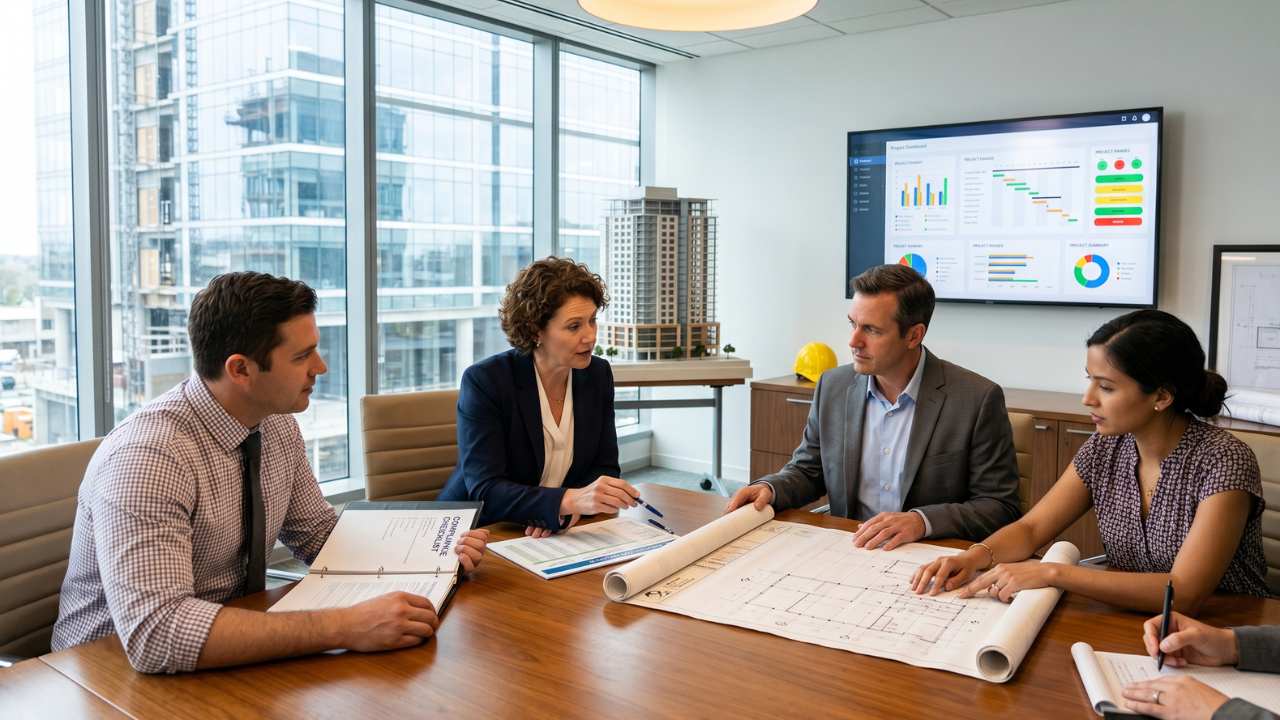
Large-scale property and design projects involve many moving parts: land planning, architectural design, budgeting, procurement, contractor coordination, approvals, safety requirements, and long-term asset goals. When these elements are not reviewed properly, a project can quickly face cost overruns, design delays, compliance problems, and disputes between stakeholders. This is why auditing plays such an important role in modern property development.
Auditing is not only about checking numbers at the end of a project. In major property and design work, it is a structured review process that helps project owners, developers, designers, consultants, and contractors understand whether the project is financially controlled, contractually compliant, and aligned with its intended scope. A strong audit process can support better decisions before small issues become expensive problems.
Why Auditing Matters in Large-Scale Projects
Large property and design projects often run for months or years. During that time, plans change, material prices shift, contractors submit variations, and design teams may adjust specifications. Without proper auditing, it becomes difficult to know whether every decision is properly documented, approved, and financially justified.
A project audit creates transparency. It reviews the relationship between budgets, contracts, design intent, payment claims, schedules, change orders, and compliance records. This gives decision-makers a clearer view of how the project is performing and where corrective action may be needed.
For large property developments, auditing also helps protect investor confidence. When stakeholders can see that costs, risks, and responsibilities are being monitored, they are more likely to trust the project process and support important decisions.
Auditing Supports Cost Control
Cost control is one of the biggest challenges in any large-scale property project. Design revisions, delayed approvals, material shortages, and contractor claims can all increase the final budget. Auditing helps identify whether costs are being recorded correctly and whether payments match the agreed contract terms.
A financial or construction audit may review invoices, purchase orders, contractor claims, subcontractor costs, contingency use, and variation approvals. This makes it easier to detect duplicate charges, unsupported claims, incorrect billing, or budget items that are drifting away from the original plan.
Early auditing is especially useful because it allows project owners to correct cost issues while the project is still active. Waiting until the end can make it harder to recover overpayments or resolve disputes. In many cases, regular auditing creates a stronger culture of accountability across the entire project team.
Auditing Improves Design Accountability
Design quality has a direct impact on construction efficiency, user experience, maintenance costs, and long-term asset value. If design decisions are not reviewed carefully, the project may suffer from poor coordination, incomplete specifications, unnecessary rework, or expensive changes during construction.
A design audit can examine whether drawings, specifications, approvals, consultant instructions, and design changes are properly coordinated. It can also review whether the design still supports the project brief, budget, safety standards, accessibility requirements, and operational goals.
This is particularly important for projects that include architects, engineers, interior designers, landscape teams, contractors, and specialist consultants. Auditing helps ensure that design decisions are not made in isolation and that every change is recorded, reviewed, and approved by the right parties.
Risk Management and Compliance
Large-scale property projects are exposed to many types of risk, including financial risk, planning risk, safety risk, environmental risk, legal risk, procurement risk, and quality risk. Auditing helps identify where these risks are being controlled and where gaps may exist.
For example, an audit may check whether contractors have the required insurance, whether safety records are maintained, whether approvals are complete, whether procurement rules were followed, and whether project documentation supports key decisions. This is valuable because poor documentation can make disputes more difficult to resolve later.
Compliance auditing also supports regulatory confidence. Property and design projects often need to meet building codes, planning conditions, contract obligations, financial reporting standards, and environmental expectations. A well-managed audit process helps confirm that the project is moving forward within the required framework.
The Role of Professional Auditors
Professional auditors bring an independent review perspective to complex projects. They can assess whether financial controls, governance processes, approvals, and reporting systems are working as intended. In some cases, businesses may work with specialists such as company auditors in Melbourne when they need stronger financial review, project governance, or compliance support.
The goal is not simply to find errors. The real value of auditing is to improve visibility, reduce uncertainty, and support better decisions. When audit findings are communicated clearly, the project team can fix weaknesses, update procedures, and reduce the chance of repeated mistakes.
Procurement and Contract Review
Procurement decisions can strongly influence project cost, quality, and delivery. If suppliers or contractors are selected without proper documentation, comparison, or approval, the project may face higher costs, poor performance, or conflicts of interest.
Auditing helps review procurement records, tender evaluations, contract terms, payment conditions, change orders, and subcontractor agreements. This can confirm whether project spending is fair, transparent, and aligned with the approved procurement process.
Contract audits are also helpful when there are many variations. They can check whether change orders were priced properly, supported by evidence, and approved before work continued. This is one of the best ways to prevent disputes from growing into expensive claims.
Quality Assurance and Construction Progress
In property and design projects, quality is not only about how the finished building looks. It also includes workmanship, material standards, compliance with specifications, inspection records, and the way defects are documented and corrected.
A project audit can review whether quality inspections are taking place at the right stages and whether issues are being closed out properly. It may also compare actual progress against the project schedule to identify delays, bottlenecks, or coordination problems.
This type of review gives project leaders more control. Instead of relying only on verbal updates, they can use documented evidence to understand whether the project is on track, whether risks are increasing, and whether additional resources are needed.
Auditing Helps Protect Long-Term Asset Value
A large-scale property project should not be judged only by whether it is completed. It should also be judged by whether it becomes a functional, durable, compliant, and valuable asset. Auditing supports this goal by connecting short-term project decisions with long-term performance.
For example, a decision to reduce material quality may lower immediate costs but increase maintenance expenses later. A design change may improve appearance but create operational inefficiencies. An audit process can help stakeholders evaluate these trade-offs more clearly.
When auditing is used from planning through completion, it supports creating a valuable asset rather than simply delivering a finished structure. This is why developers, investors, and project owners increasingly view auditing as a strategic tool, not just a financial review.
When Should Auditing Take Place?
The best time to audit a project is not only at the end. For large-scale property and design projects, auditing should happen at key stages so that problems can be identified early and corrected before they become larger.
- Pre-project audit: Reviews budgets, feasibility, funding assumptions, procurement plans, risk registers, and governance structures before major commitments are made.
- Design-stage audit: Checks whether design decisions match the project brief, budget, compliance requirements, and stakeholder expectations.
- Procurement audit: Reviews tendering, contractor selection, supplier approvals, and contract terms.
- Construction-phase audit: Monitors cost claims, variations, progress reports, quality records, and risk controls during delivery.
- Post-completion audit: Reviews final accounts, defects, warranties, handover records, lessons learned, and long-term asset readiness.
Practical Audit Checklist for Property and Design Projects
A useful project audit checklist may include the following review points:
- Is the project budget current and supported by clear assumptions?
- Are all design changes documented, reviewed, and approved?
- Do payment claims match contract terms and verified work progress?
- Are change orders priced and approved before additional work begins?
- Are procurement decisions transparent and supported by records?
- Are quality inspections documented and defects tracked to completion?
- Are safety, environmental, and compliance requirements being followed?
- Is the project schedule updated with realistic progress information?
- Are risks reviewed regularly and assigned to responsible owners?
- Are final handover records, warranties, and asset documents complete?
Common Problems Auditing Can Reveal
Auditing can reveal issues that may otherwise remain hidden until the project becomes more difficult or expensive to manage. Common findings include incomplete contract records, delayed approvals, weak cost tracking, unsupported invoices, poor variation management, unclear responsibilities, and inconsistent reporting.
It can also reveal design coordination problems, such as missing details, conflicting consultant drawings, or late design revisions that affect construction sequencing. These issues do not always mean that a project is failing, but they do show where management attention is needed.
When audit findings are treated constructively, they can improve communication between owners, designers, contractors, and consultants. This leads to better documentation, stronger accountability, and fewer surprises during the project lifecycle.
How Auditing Supports Stakeholder Confidence
Large-scale property and design projects often involve investors, lenders, tenants, public authorities, contractors, consultants, and end users. Each group may have different priorities, but all of them need confidence that the project is being managed responsibly.
Clear audit reports can provide that confidence. They show whether key risks are being monitored, whether spending is controlled, whether approvals are documented, and whether the project remains aligned with its objectives. This can be especially valuable when decisions must be made quickly or when stakeholders need assurance before releasing additional funds.
Final Thoughts
Auditing plays a vital role in large-scale property and design projects because it gives structure, visibility, and accountability to complex work. It helps control costs, improve design decisions, manage compliance, reduce risk, and protect long-term asset value.
Whether a project is in early planning, active construction, or final handover, a strong audit process can help stakeholders make better decisions with better information. Instead of viewing auditing as a final check, project owners should treat it as an ongoing management tool that supports successful delivery from start to finish. For help with related topics, visit our contact page or continue reading more articles on the almawadahit.com