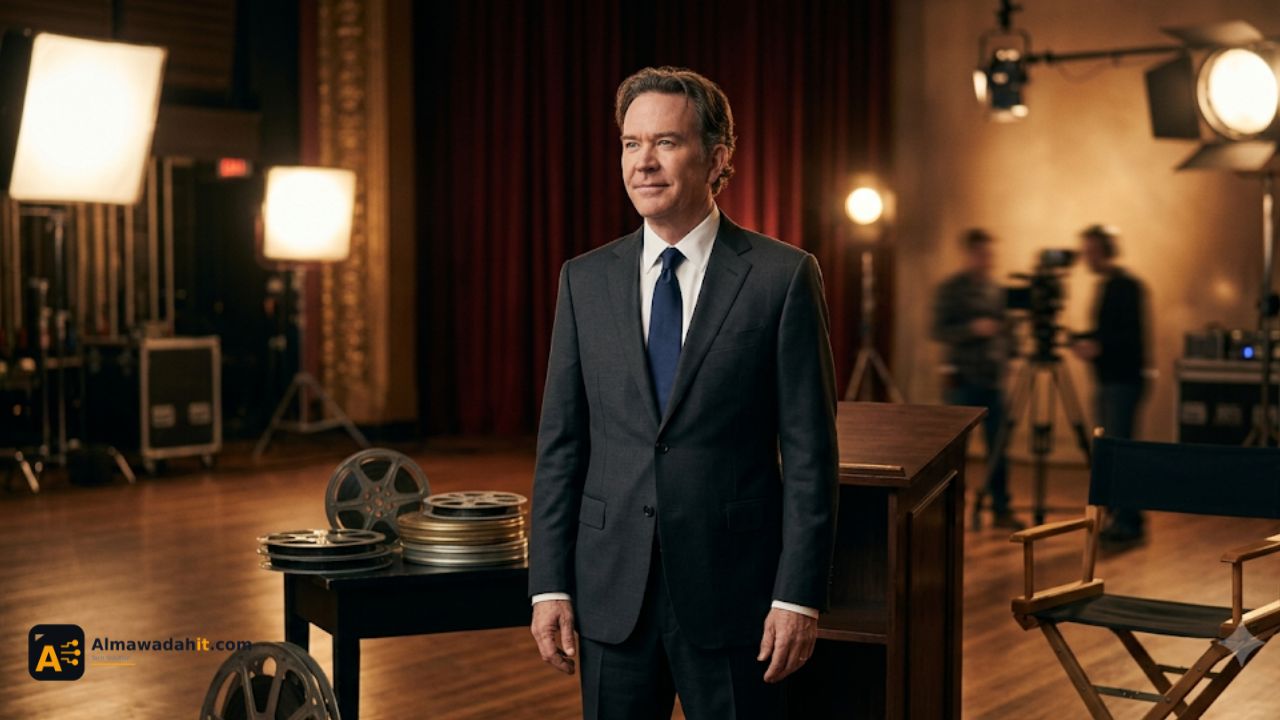
Timothy Hutton entered Hollywood history at an age when most actors are still searching for their first meaningful role. His emotionally powerful performance in Ordinary People earned him an Academy Award at only 20, immediately establishing him as one of the most promising performers of his generation. More than four decades later, his career includes films, television dramas, directing projects, producing credits, theatre work, and one of the most recognisable leading roles in modern cable television.
That career longevity naturally creates interest in Timothy Hutton net worth, his acting salary, and the income he has earned since his remarkable early breakthrough. Different online publications currently estimate his fortune at approximately $12 million to $15 million. However, Hutton has not released personal financial documents confirming a precise amount, so these figures should be viewed as informed estimates rather than a verified bank balance.
His financial story is particularly interesting because it does not follow the usual Hollywood pattern of endorsements, blockbuster franchises, and highly publicised business investments. Hutton appears to have built most of his wealth through steady professional work, selecting a mixture of leading roles, supporting performances, television series, independent films, directing assignments, and production responsibilities.
Readers who enjoy carefully researched celebrity wealth profiles can find more entertainment coverage on almawadahit.com.
Timothy Hutton Quick Facts
| Detail | Information |
|---|---|
| Full Name | Timothy Tarquin Hutton |
| Date of Birth | August 16, 1960 |
| Birthplace | Malibu, California, United States |
| Profession | Actor, director and producer |
| Famous Breakthrough | Conrad Jarrett in Ordinary People |
| Major Award | Academy Award for Best Supporting Actor |
| Golden Globe Record | Two wins from four nominations |
| Emmy Recognition | One Primetime Emmy nomination |
| Estimated Net Worth | Approximately $12 million to $15 million |
| Main Income Sources | Film, television, directing, producing and residual payments |
What Is Timothy Hutton’s Net Worth?
Timothy Hutton’s net worth is commonly estimated to fall between $12 million and $15 million. Celebrity Net Worth publishes an estimate of $12 million, while another 2026 entertainment profile places his fortune closer to $15 million. Neither number comes from Hutton’s tax filings, investment records, property documents, or a financial disclosure directly approved by the actor.
The safest conclusion is that Timothy Hutton is a multimillionaire whose wealth has developed across a career lasting more than four decades. His fortune likely reflects cumulative acting fees, television contracts, directing income, producing work, residuals, property ownership, taxes, professional expenses, and personal financial decisions.
Net worth should not be confused with total career earnings. An actor might receive millions of dollars in gross compensation during a career but keep only part of that amount after agents’ commissions, management fees, legal services, taxes, travel, housing, and everyday living expenses. Investments can increase wealth, while divorces, unsuccessful projects, long breaks between roles, or expensive purchases can reduce it.
For more profiles that carefully distinguish estimated wealth from confirmed earnings, visit the celebrity net worth section on almawadahit.
Early Life and the Beginning of His Acting Career
Timothy Hutton was born on August 16, 1960, in Malibu, California. He is the son of actor Jim Hutton, who appeared in films and television series before his death in 1979. Timothy began exploring acting as a teenager and gained early professional experience through television movies during the late 1970s.
His early credits included productions such as Zuma Beach, Friendly Fire, The Best Place to Be, and Young Love, First Love. These roles gave him practical experience in front of the camera before he moved into feature films.
Unlike actors who spend years in minor cinema roles before gaining recognition, Hutton received his defining opportunity almost immediately. Robert Redford selected him to play Conrad Jarrett in Ordinary People, a family drama dealing with grief, guilt, emotional isolation, and the consequences of tragedy.
It was an unusually demanding role for a young actor. Hutton had to portray a teenager attempting to rebuild his life after the death of his brother and a period of psychiatric treatment. His restrained but emotionally intense performance became the centre of the film and transformed him from a young television performer into an internationally recognised actor.
The Success of Ordinary People
Released in 1980, Ordinary People was Robert Redford’s feature-film directing debut. Timothy Hutton appeared alongside Donald Sutherland, Mary Tyler Moore, Judd Hirsch, and Elizabeth McGovern.
The film became both a critical and awards success. It won the Academy Awards for Best Picture, Best Director, Best Adapted Screenplay, and Best Supporting Actor. The supporting-actor award went to Hutton, who was only 20 at the time of the ceremony. The Academy and Television Academy continue to recognise him as the youngest winner in the history of that category.
Hutton’s connection to the character was strengthened by personal loss. In a later Golden Globes interview, he explained that his father had died shortly before production began. Although his own family relationships differed from those shown in the film, he understood the emotions associated with loss and used that understanding while developing Conrad’s character.
Winning an Oscar so early could have created enormous pressure. Audiences, producers, and critics immediately expected every new project to match the emotional impact of his first major film. Instead of chasing only similar dramatic roles, Hutton gradually built a varied career across different genres.
Academy Award and Golden Globe Success
The Academy Award remains Timothy Hutton’s most important professional honour, but it was not his only major recognition for Ordinary People. He also won two Golden Globe awards for the film: Best Supporting Actor and New Star of the Year.
The official Golden Globes database records four nominations and two victories for Hutton. In addition to his two wins for Ordinary People, he received acting nominations for Taps and the television movie A Long Way Home.
Receiving an Oscar and two Golden Globes from an early feature-film performance gave Hutton valuable career leverage. An award does not guarantee lifelong wealth, but it can improve an actor’s ability to secure prominent roles, negotiate compensation, meet respected directors, and remain under consideration for prestige productions.
The awards also gave him something that cannot be measured through salary alone: lasting professional credibility. Decades after Ordinary People, almost every profile of Hutton still begins with his historic Oscar achievement.
Film Career After His Oscar Win
Following Ordinary People, Hutton appeared in Taps, a military drama co-starring George C. Scott, Sean Penn, and a young Tom Cruise. His performance earned another Golden Globe nomination and demonstrated that his first success was not simply a one-film achievement.
During the 1980s, he continued working in films such as Daniel, Iceman, Turk 182!, The Falcon and the Snowman, Made in Heaven, and A Time of Destiny. These projects allowed him to move between political drama, romance, thrillers, and character-driven stories.
In later decades, Hutton appeared in films including:
- Q&A
- The Dark Half
- French Kiss
- Beautiful Girls
- The General’s Daughter
- Kinsey
- The Good Shepherd
- The Last Mimzy
- The Ghost Writer
- All the Money in the World
- The Glorias
The official Golden Globes biography highlights his work with filmmakers and performers including Robert Redford, John Schlesinger, Lawrence Kasdan, Robert De Niro, Julie Taymor, Mary Tyler Moore, Donald Sutherland, Sean Penn, Meg Ryan, and Natalie Portman.
Not all these films were major box-office hits, but together they show the consistency behind Timothy Hutton’s income. Long-term wealth for a working actor is often built through regular employment rather than one record-breaking salary.
Television Career and Leverage Income
Television became an increasingly important part of Hutton’s career and probably one of the most stable sources of his earnings.
He played Archie Goodwin in A Nero Wolfe Mystery, which aired from 2001 to 2002. His responsibilities extended beyond acting because he also directed episodes of the series. Later, he appeared in projects such as 5ive Days to Midnight and Kidnapped.
His most sustained television success arrived with Leverage. Hutton played Nathan “Nate” Ford, a former insurance investigator who leads a group of specialists using elaborate schemes to help people harmed by powerful organisations.
The series ran from 2008 until 2012, giving Hutton a five-season leading role. The Television Academy identifies Leverage as one of the defining television projects of his career.
No authoritative public record confirms his exact salary per episode. Online estimates may offer specific numbers, but without contracts, payroll documents, or reliable trade reporting, they should not be treated as established facts.
Even without knowing the precise amount, a multi-season leading role can be financially valuable. It may generate regular episode fees, contractual increases, residual payments, and additional compensation when an actor also has production responsibilities. The stability of Leverage likely made television a major contributor to Timothy Hutton’s net worth.
American Crime and Emmy Recognition
Hutton received another important period of critical recognition through ABC’s anthology drama American Crime. He played Russ Skokie in the first season and later returned to portray different characters as the programme changed its story and setting.
His first-season performance earned a 2015 Primetime Emmy nomination for Outstanding Lead Actor in a Limited Series or Movie. The official Television Academy database lists this as his Emmy nomination.
The role proved that Hutton could still deliver emotionally complex performances decades after his Oscar breakthrough. It also introduced him to viewers who may not have been familiar with his earlier cinema work.
Prestige television does not always pay more than mainstream network entertainment, but it can strengthen an actor’s professional reputation and create opportunities for additional roles. In Hutton’s case, American Crime helped support the later stage of a career already known for film, cable television, and directing.
Other Important Television Roles
Hutton continued appearing in high-profile television projects after American Crime. His credits include roles in:
- Jack Ryan
- The Haunting of Hill House
- How to Get Away with Murder
- Almost Family
- Women of the Movement
- S.W.A.T.
His performance as the older Hugh Crain in Netflix’s The Haunting of Hill House connected him with a large streaming audience. The series became one of the most widely discussed horror dramas of its period, while Hutton’s character contributed to the emotional story surrounding the troubled Crain family.
These later roles demonstrate why career longevity matters when estimating celebrity wealth. Hutton did not depend entirely on the fame produced by his Oscar. He continued adapting as the entertainment industry moved from theatrical films and network television to cable programming and streaming platforms.
Directing and Producing Work
Acting has been Hutton’s primary profession, but he has also earned money and expanded his creative influence behind the camera.
He directed an episode of Steven Spielberg’s anthology series Amazing Stories and later made his feature directing debut with Digging to China. He also directed several episodes of A Nero Wolfe Mystery, the series in which he played Archie Goodwin.
Directing can provide a separate professional fee from acting. It also gives performers more control over storytelling, visual style, pacing, and character development. Producing responsibilities may generate additional compensation, although the exact terms of Hutton’s agreements are private.
These roles are important when discussing Timothy Hutton’s income because they show that his career has not been limited to appearing on screen. His knowledge of production and direction created more than one path to earning within the entertainment industry.
Main Sources of Timothy Hutton’s Income
Film Salaries
Feature films formed the foundation of Hutton’s career. His early success likely allowed him to negotiate stronger fees for later projects, although verified salary details for individual films are not widely available.
Television Contracts
Long-running television work may have provided greater consistency than film. Leverage, in particular, gave him a regular leading role over several seasons.
Directing Fees
Hutton has directed a feature film and multiple television episodes. Directors are generally compensated separately for preparation, filming, and post-production responsibilities.
Producing Income
Production credits may include fixed fees, contractual bonuses, or other financial arrangements. The details depend on each production agreement and are usually private.
Residual Payments
Actors, directors, and other eligible professionals may receive residuals when qualifying productions are rebroadcast, licensed, released on home media, or distributed through certain streaming arrangements. The amounts vary significantly.
Theatre Work
Hutton has also performed on stage. Theatre is unlikely to represent the largest part of his fortune, but it adds another dimension to his income and professional experience.
Investments and Property
Public information does not provide a complete record of Hutton’s investment portfolio. Any suggestion that a particular stock, company, or property forms a major part of his wealth would therefore be speculative.
How Much Does Timothy Hutton Earn Per Year?
Timothy Hutton does not appear to have a fixed publicly disclosed annual salary. Actors are usually paid project by project, meaning their income can change dramatically from one year to another.
A year involving a regular television series, a feature film, and directing work could produce substantial earnings. A quieter year with only one supporting role might generate much less. Residuals and investments may continue producing income between major projects, but the amounts are not publicly confirmed.
This is why it would be misleading to publish a precise annual salary without supporting documents. The available evidence supports the conclusion that Hutton has earned significant income throughout his career, but it does not reveal exactly how much he currently makes each year.
Timothy Hutton’s Lifestyle
Despite his decades in Hollywood, Timothy Hutton is not primarily associated with an extravagant celebrity image. He has generally attracted attention through acting, directing, awards, and public appearances rather than displays of private jets, large vehicle collections, or highly publicised luxury purchases.
His public style is usually polished but understated. At premieres and award events, he commonly appears in traditional suits or smart casual clothing rather than highly theatrical fashion. Away from promotional events, he maintains a comparatively private profile.
That does not mean his lifestyle is modest in a financial sense. A fortune estimated in the eight-figure range can support comfortable housing, travel, professional services, family responsibilities, and long-term financial security. However, there is not enough verified information to describe his daily life as excessively luxurious.
Readers interested in how public success connects with privacy, routines, travel, and spending can explore the celebrity lifestyle coverage available on almawadahit.
Is Timothy Hutton’s Net Worth Accurate?
No celebrity net worth estimate should be treated as completely accurate unless the person has released detailed financial records.
Websites estimating Timothy Hutton’s fortune may consider his career length, number of credits, reported industry pay, real estate information, and likely professional expenses. They generally cannot see his private savings, investments, liabilities, taxes, trusts, loans, or current contracts.
For that reason, the range of $12 million to $15 million is best viewed as a reasonable media estimate. It communicates that he has achieved substantial financial success without pretending that an exact private figure is publicly known.
Why Timothy Hutton’s Career Has Lasted
Hutton’s career longevity comes from more than his early Oscar.
First, he avoided becoming permanently restricted to one type of character. He moved between drama, romance, crime, horror, political stories, and television thrillers.
Second, he adapted to changes in the industry. His career began with television movies and theatrical films, moved into cable dramas, and later expanded through streaming productions.
Third, he developed skills behind the camera. Directing and producing gave him a wider understanding of filmmaking and created additional career opportunities.
Finally, he maintained the professional credibility that came with Ordinary People. While not every later project achieved the same recognition, his Oscar-winning performance remained evidence of his ability to handle challenging material.
Frequently Asked Questions
What is Timothy Hutton’s net worth?
Timothy Hutton’s net worth is generally estimated at approximately $12 million to $15 million. The exact figure has not been publicly confirmed by the actor or through official financial records.
How did Timothy Hutton make his money?
He made most of his money through film and television acting. His additional income sources include directing, producing, theatre work, and possible residual payments.
How much did Timothy Hutton earn from Leverage?
His verified salary for Leverage has not been publicly disclosed. The five-season leading role was probably an important source of income, but specific per-episode figures remain unconfirmed.
How old was Timothy Hutton when he won an Oscar?
He was 20 years old when he won the Academy Award for Best Supporting Actor for Ordinary People.
Is Timothy Hutton the youngest male Oscar winner?
He remains the youngest winner in the Academy Award for Best Supporting Actor category. Tatum O’Neal was younger when she won Best Supporting Actress, so Hutton is not the youngest Oscar winner across all acting categories.
How many Golden Globes has Timothy Hutton won?
The official Golden Globes database records two wins from four nominations. Both victories came for Ordinary People.
Has Timothy Hutton won an Emmy?
He has not won a Primetime Emmy, but he received a 2015 nomination for his performance in American Crime.
Is Timothy Hutton still acting?
Hutton has continued appearing in film and television projects during the later stages of his career, showing that his professional work extended well beyond his early Oscar success.
Final Thoughts
Timothy Hutton net worth is estimated to be between $12 million and $15 million, but the exact amount remains private. His fortune appears to have developed through more than four decades of film acting, television contracts, directing assignments, producing work, theatre appearances, and potential residual income.
His financial story began with an extraordinary career breakthrough. At only 20, Hutton won the Academy Award for Best Supporting Actor for Ordinary People, becoming the youngest performer to win that category. He also earned two Golden Globes for the same film and later received additional recognition, including an Emmy nomination for American Crime.
However, Hutton’s career should not be reduced to one award. From Taps and The Falcon and the Snowman to Beautiful Girls, Leverage, American Crime, and The Haunting of Hill House, he continued building a varied body of work across several generations of entertainment.
His lifestyle appears more private and professionally focused than openly extravagant. That makes his wealth story less about celebrity display and more about the long-term value of versatility, reputation, and consistent work. His Oscar created the first major opportunity, but his ability to remain active across film, television, directing, and production is what turned early recognition into lasting career income.