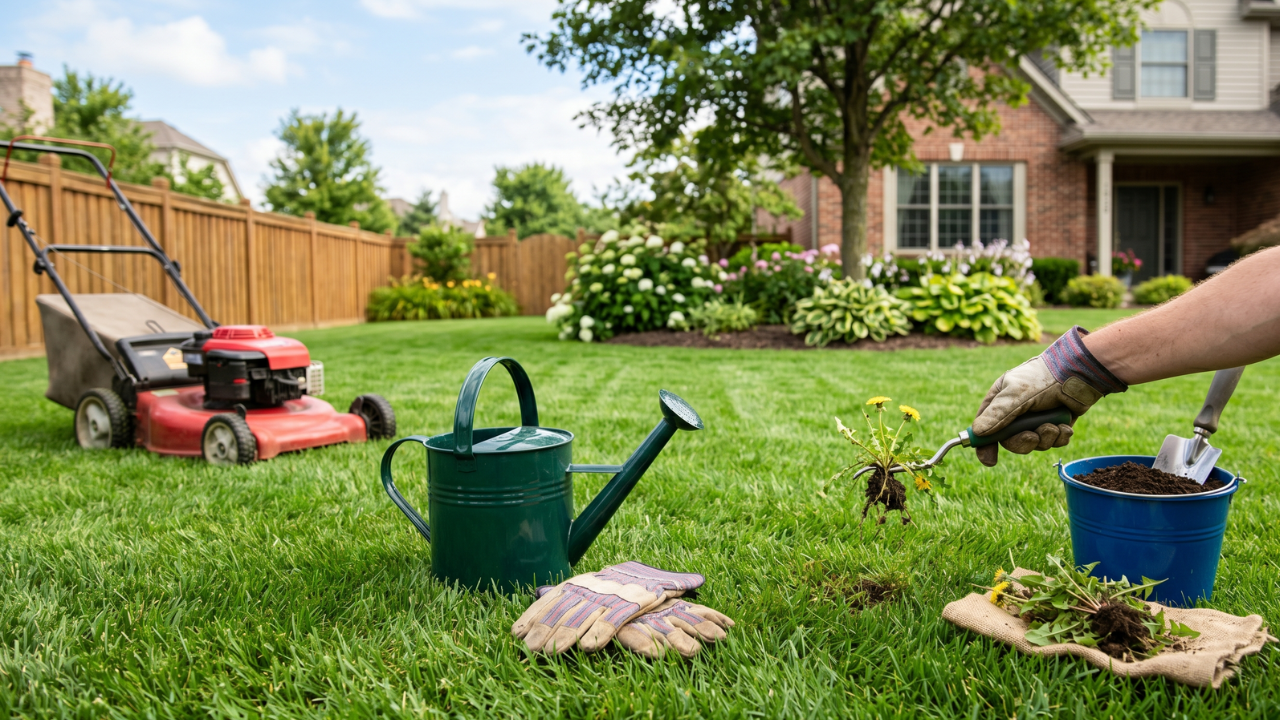
A healthy lawn does not happen by accident. It is the result of consistent mowing, smart watering, proper fertilizing, seasonal care, and careful weed control. Many homeowners want thick, green grass, but simple mistakes can weaken turf, invite weeds, waste water, and create long-term lawn problems.
This lawn care guide explains the most important dos and don’ts of maintaining a yard that looks good and grows stronger over time. Whether you are caring for a small front lawn or a larger outdoor space, the right routine can help you save money, reduce waste, and avoid unnecessary damage.
For more help with local lawn maintenance topics, explore our Lawn Care Services page and related outdoor care resources.
Do: Mow at the Right Height
Mowing is one of the most basic lawn care tasks, but it is also one of the easiest to get wrong. Cutting grass too short may make the lawn look neat for a day, but it can weaken the root system, expose soil to sunlight, and make it easier for weeds to grow.
A good rule is to mow often enough that you never remove more than one-third of the grass blade at a time. Taller grass helps shade the soil, retain moisture, and support deeper roots. This is especially important during hot or dry weather, when grass is already under stress.
- Keep mower blades sharp so grass is cut cleanly instead of torn.
- Raise the mowing height during summer heat or drought stress.
- Change mowing direction regularly to reduce soil compaction and prevent ruts.
Don’t: Scalp the Lawn
Scalping means cutting grass extremely short. Some people do it because they believe it reduces mowing frequency, but it often creates more problems than it solves. Scalped lawns dry out faster, recover slowly, and may develop thin patches where weeds can take over.
Instead of cutting low, build a steady mowing schedule based on grass growth. During peak growing seasons, this may mean mowing more often. During slow-growth periods, you may mow less frequently.
Do: Water Deeply and Wisely
Watering is essential for lawn health, but overwatering can be just as harmful as underwatering. The goal is to encourage roots to grow deeper into the soil. Deep, less frequent watering is usually better than light daily watering, which can keep roots shallow and make grass less resilient.
Water early in the morning when temperatures are cooler and evaporation is lower. This gives the lawn time to absorb moisture before the heat of the day. Avoid watering late at night because prolonged moisture on grass blades may encourage disease in some conditions.
- Check soil moisture before turning on sprinklers.
- Avoid watering during windy or rainy weather.
- Fix leaks and broken sprinkler heads quickly.
- Water only as much as the root zone can absorb.
Don’t: Waste Water on Poor Timing
One of the biggest lawn care mistakes is watering on a strict schedule without considering weather, soil type, and grass needs. Watering after rain, during strong winds, or in the hottest part of the day can waste water and may not benefit the lawn much.
Smart watering helps prevent waste. It also reduces runoff that can carry fertilizer or pesticides away from your yard and into streets, drains, or waterways.
Do: Test Your Soil Before Fertilizing
Fertilizer can help grass grow, but guessing can lead to over-application, poor results, or nutrient imbalance. A soil test gives useful information about pH and nutrient levels so you can choose the right fertilizer and apply the correct amount.
Fertilizing at the wrong time can encourage weak growth, increase disease pressure, or send nutrients into runoff. In many climates, the best timing depends on whether you have cool-season or warm-season grass. Always follow product directions and local recommendations.
Don’t: Over-Fertilize
More fertilizer does not automatically mean a greener lawn. Too much fertilizer can burn grass, encourage excessive top growth, and increase the risk of nutrient runoff. It can also cost more money without improving long-term lawn health.
Apply fertilizer only when needed and at recommended rates. Avoid applying fertilizer before heavy rain or windy conditions. If fertilizer spills on sidewalks or driveways, sweep it back onto the lawn instead of washing it away.
Do: Control Weeds Early
Weeds compete with grass for sunlight, space, water, and nutrients. The best approach is prevention. A dense, healthy lawn naturally leaves less room for weeds to establish. Proper mowing height, balanced watering, and soil health all help reduce weed pressure.
For recurring weed problems, identify the weed before choosing a control method. Broadleaf weeds, grassy weeds, and sedges may require different strategies. Some problems may improve with cultural practices, while others may require targeted treatments.
If weeds are becoming difficult to manage, professional guidance from NAZ Weed Control can help homeowners understand the right approach for their lawn conditions.
Don’t: Use Weed Products Without Reading the Label
Weed control products must be used carefully. Applying the wrong product can damage desirable grass, nearby plants, or newly seeded areas. Some products are designed for specific grass types, temperatures, weed stages, or seasons.
Always read the label before using any lawn treatment. Follow directions for mixing, application rate, weather conditions, safety precautions, and re-entry time for children or pets. When in doubt, use the most targeted and least excessive method possible.
Do: Leave Grass Clippings When Appropriate
Grass clippings can return nutrients to the soil when they are short and evenly spread. This practice, often called grasscycling, can support lawn health and reduce yard waste. It also saves time because you do not need to bag clippings after every mow.
However, if clippings are long, wet, or clumped, they can smother grass. In that case, mow again to mulch them more finely or rake up the heavy clumps.
Don’t: Ignore Thatch and Compaction
A lawn may look weak even when mowing and watering seem correct. Thatch buildup and compacted soil can prevent air, water, and nutrients from reaching the root zone. This is common in high-traffic areas where people walk, play, or park equipment.
Core aeration can help improve compacted lawns by opening the soil and encouraging better root growth. Dethatching may also be useful when the thatch layer becomes too thick. These tasks should be done at the right time for your grass type so the lawn can recover quickly.
Do: Choose the Right Grass for Your Area
Not every grass type performs well in every climate. A lawn that is not suited to local weather, sunlight, soil, or water conditions will require more effort and may still struggle. Choosing the right seed or sod can make lawn care easier and more efficient.
If your yard has shade, heavy foot traffic, sandy soil, clay soil, or poor drainage, choose grass varieties that match those conditions. This can reduce the need for extra watering, fertilizer, and repairs.
Don’t: Treat Every Lawn the Same
A common mistake is copying a neighbor’s lawn care routine without understanding your own yard. Two lawns on the same street may have different soil, drainage, shade, weeds, and grass varieties. The best lawn care plan should be based on your specific conditions.
For more seasonal yard tips and lawn maintenance ideas, visit our Blog section.
Do: Build a Seasonal Lawn Care Routine
Lawn care changes throughout the year. Spring may focus on cleanup, soil testing, light fertilizing, and weed prevention. Summer often requires careful mowing and watering. Fall may be the best time for aeration, overseeding, and strengthening roots before winter, depending on your grass type and climate.
- Spring: Inspect the lawn, clean debris, test soil, and plan weed prevention.
- Summer: Mow higher, water wisely, and avoid stressing the lawn during extreme heat.
- Fall: Aerate, overseed, and fertilize when appropriate for your grass type.
- Winter: Reduce traffic on dormant grass and prepare equipment for the next season.
Don’t: Wait Until Problems Spread
Small lawn issues are easier to fix than large ones. A few weeds, a dry patch, or a thinning area can often be corrected quickly. Waiting too long may allow weeds, pests, disease, or soil problems to spread across the yard.
Walk your lawn regularly and look for changes in color, texture, growth, and moisture. Early attention can prevent expensive repairs later.
Quick Lawn Care Checklist
- Mow high and avoid removing more than one-third of the grass blade.
- Water deeply but only when the lawn needs it.
- Test soil before applying fertilizer.
- Control weeds early and use the correct treatment method.
- Leave short grass clippings on the lawn when possible.
- Aerate compacted areas when needed.
- Choose grass types suited to your climate and yard conditions.
- Adjust lawn care routines by season.
Final Thoughts
The best lawn care routine is simple, consistent, and based on what your grass actually needs. By following the right dos and avoiding the common don’ts, homeowners can build a healthier lawn with fewer weeds, better roots, and less wasted effort.
Good lawn care is not just about making grass look green today. It is about creating long-term strength through smart mowing, responsible watering, careful fertilizing, and early weed control. When these habits work together, your lawn becomes easier to maintain and more attractive throughout the year. Need help deciding which lawn care steps fit your yard? Visit our Contact Us page to get started