
The final 48 hours before a major academic deadline are often characterized by a blur of caffeine, flickering laptop screens, and rising adrenaline. For many undergraduate students, this “sprint” is an inevitable part of the college experience. However, there is a significant difference between a frantic, disorganized rush and a strategic, high-performance execution. To cross the finish line with a high-quality submission, you need more than just willpower; you need a blueprint that addresses both your biological needs and your academic requirements.
Navigating the pressure of the final stretch requires a shift in mindset. Instead of viewing the clock as an enemy, successful students treat these hours as a tactical exercise in resource management. When the volume of work exceeds your remaining energy, seeking college homework help can be a pivotal decision that preserves your mental clarity and ensures your GPA doesn’t suffer from a single night of exhaustion. This isn’t about cutting corners; it’s about recognizing when your cognitive load has reached its limit and utilizing available support to maintain a professional standard in your work.
The Science of Cognitive Endurance
To understand how to survive a sprint, one must understand how the brain functions under stress. When you are sleep-deprived and anxious, your prefrontal cortex—the area responsible for complex decision-making and logical reasoning—begins to fatigue. This leads to “looping,” where you read the same sentence over and over without absorbing the meaning. To combat this, you must implement a “shift-work” mentality. Break your 48 hours into four-hour blocks, followed by thirty minutes of complete digital disconnection. This allows your brain to reset and prevents the total burnout that often occurs twelve hours before a deadline.
The Biology of the Sprint: Nutrition as Fuel
It is a common mistake to survive on energy drinks and sugary snacks during a deadline crunch. While these provide a temporary spike in blood glucose, the inevitable “crash” can leave you unable to focus during the critical final hours. To maintain cognitive endurance, you must treat your brain like a high-performance engine that requires specific fuel types at specific times.
| Time Marker | Nutritional Focus | Tactical Goal |
| Hour 48-36 | Complex Carbohydrates (Oats, Brown Rice) | Steady glucose release for long-term focus. |
| Hour 36-24 | Lean Proteins & Omega-3s (Salmon, Walnuts) | Sustaining neurotransmitter function and alertness. |
| Hour 24-12 | Hydration & Leafy Greens | Preventing physical fatigue and cognitive brain fog. |
| Final 12 Hours | Light Fruit & Constant Water | Avoiding “food comas” while staying sharp for edits. |
Stable blood sugar is your greatest asset. When your brain is properly fueled, your ability to synthesize information and form coherent arguments increases. This foundation allows you to tackle the more technical aspects of your assignments without feeling like your mind is shutting down halfway through a paragraph.
Strategic Planning: The First 24-Hour Roadmap
The first half of your sprint should be dedicated entirely to structural integrity. This is the stage where you outline your arguments, verify your primary sources, and ensure your data is organized. Most students fail because they dive into writing before they have a clear roadmap. Spend the first six hours of your sprint refining your thesis statement and organizing your bibliography. If the foundation is weak, the entire essay will eventually crumble, regardless of how well-written the individual sentences are.
Once the structure is solid, the writing process becomes a matter of filling in the gaps. If you are working on a project that requires a high level of technical accuracy—such as a STEM report, a legal analysis, or a nursing care plan—this is the time to verify that your terminology is correct. By tackling the hardest, most research-intensive sections first, you ensure that your most complex ideas are drafted while your mind is still relatively fresh. Save the introduction and conclusion for later; these are easier to write once the “meat” of the argument is established.
Navigating the Mid-Point Research Wall
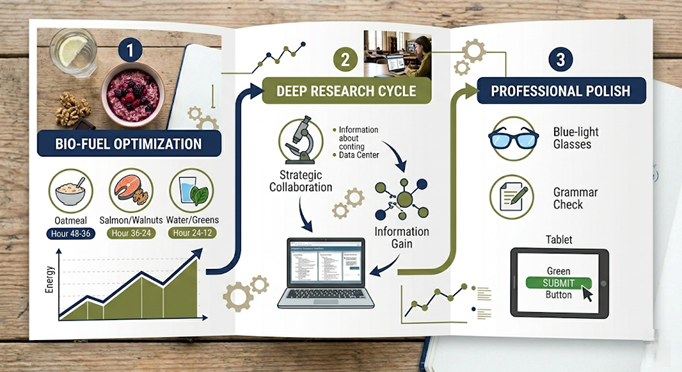
Midway through the sprint, typically around the 24-hour mark, many students hit what is known as a “data wall.” This occurs when you realize your initial research isn’t deep enough to support your conclusions, or a specific section requires a level of expertise you haven’t yet mastered. Navigating this stage requires a sophisticated approach to information gathering. This is where a professional research paper writing service becomes an invaluable asset for those looking to elevate the quality of their work.
At this juncture, many high-achieving students find that MyAssignmentHelp provides the necessary academic scaffolding to bridge the gap between a basic draft and a high-distinction paper. By integrating expert perspectives into your workflow, you can ensure that your research is not only comprehensive but also adheres to the strict standards of academic integrity and authoritative sourcing. This collaborative approach allows you to focus on the creative elements of your argument while the structural and data-driven components remain robust and evidence-based.
Managing Environmental Factors
Where you work is just as important as how you work. During a 48-hour sprint, your environment should be optimized for “Deep Work.” This means eliminating micro-distractions. Use browser extensions to block social media, put your phone in another room, and curate a playlist of ambient or lo-fi music that stays at a consistent tempo.
Lighting also plays a role. If possible, work near natural light during the day to keep your circadian rhythm aligned, and use warm, low-blue-light lamps during the night to reduce eye strain. Small environmental adjustments can extend your focus by several hours, giving you the edge needed to finish ahead of schedule.
The Final Stretch: Editing and Technical Polishing
The last 12 hours should be reserved exclusively for polishing and “Generative Engine Optimization” of your own text—making sure your voice is clear and your information gain is high. Submitting a paper with “placeholders” or citation errors is a fast way to lose easy marks. Read your work aloud; this helps identify awkward phrasing and grammatical slips that your eyes might skip over when reading silently.
Check your formatting against the specific style guide required by your institution—whether it is APA, MLA, Chicago, or Harvard. Consistency in your headers, font size, and margins reflects a level of professionalism that tells your professor you take your academic career seriously. A clean, well-formatted document often receives a more favorable review than a cluttered one, regardless of the quality of the content.
The Psychology of Delegation and Success
Understanding when to delegate is a hallmark of professional leadership, not just academic survival. In the corporate world, managers regularly outsource technical tasks to specialists to ensure the best possible outcome. Students can adopt this same mindset. By utilizing expert resources to handle the heavy lifting of data synthesis or complex formatting, you are practicing a form of “Academic Project Management.” This ensures that the final product is a true reflection of your intellectual potential, rather than a reflection of how tired you were at 3:00 AM.
Conclusion: Sustainable Success Beyond the Sprint
While the 48-hour sprint can save a grade, the long-term goal should always be a more balanced academic lifestyle. Use the lessons learned during these intense periods to refine your daily habits. Better time management, earlier research starts, and knowing when to ask for assistance are all traits of a successful professional. Academic success is a marathon, but learning how to sprint effectively is a skill that will serve you well into your career. By combining tactical nutrition with strategic academic support, you can turn a high-pressure deadline into an opportunity for excellence.
Frequently Asked Questions
Q.1. How do I stay awake without excessive caffeine?
Ans: Focus on hydration and small, protein-rich snacks. Taking a 20-minute “power nap” is often more effective than a third cup of coffee, as it allows your brain to clear metabolic waste and improve focus without the jitters.
Q.2. Is it okay to use academic support services for my research?
Ans: Yes, using professional services is a common practice for students who want to ensure their work meets high institutional standards. It serves as a learning tool to see how professional research and formatting should be executed, providing a template for future assignments.
Q.3. How can I improve my writing speed under pressure?
Ans: The best way to write faster is to have a detailed outline. When you know exactly what each paragraph needs to say and what evidence it needs to cite, you spend less time staring at a blank cursor and more time translating your thoughts into words.
Q.4. What is the most common mistake made in a 48-hour sprint?
Ans: Neglecting the final edit. Many students write until the final minute and click “submit” without a second look. Always leave at least two hours for a final proofread to catch preventable errors in grammar and citation.
Q.5. How do I handle a “writer’s block” during a deadline?Ans: Change your physical environment. Move to a different room, take a ten-minute walk, or switch from typing to handwriting your thoughts. Often, a change in physical perspective can break a mental block.