Los Angeles has long been associated with movie premieres, music studios, red carpets, and global entertainment. Behind that public image is another side of celebrity life: private estates hidden behind gates, hillside homes overlooking the city, and architect-designed residences that combine comfort with security. Celebrity homes in Los Angeles are not limited to one neighborhood or one type of mansion. They range from historic Spanish villas and mid-century landmarks to modern glass houses and resort-style compounds.
The city’s appeal comes from variety. A performer may prefer the energy and views of the Hollywood Hills, while a business leader may choose the privacy of Bel Air. Some buyers want to be close to studios, restaurants, and shopping. Others value large lots, controlled access, ocean air, or quiet residential streets.
This guide explores the most famous areas for celebrity homes in Los Angeles, the architectural styles that define luxury living, and the features that make these properties different from ordinary high-end houses.
Why Los Angeles Attracts Celebrities
Los Angeles remains one of the world’s most important entertainment centers. Film studios, television companies, music labels, agencies, fashion brands, and digital media businesses are spread across the region. Living nearby can reduce travel time between meetings, rehearsals, filming locations, recording sessions, and industry events.
Climate is another advantage. Mild weather supports outdoor living for much of the year, allowing homes to include pools, terraces, gardens, outdoor kitchens, and open-air lounges. Hillside lots can provide sweeping city views, while coastal communities offer ocean scenery and beach access.
Privacy may be the strongest attraction. Many luxury neighborhoods contain gated roads, mature landscaping, long driveways, and homes that cannot easily be seen from the street. A carefully designed estate can feel close to the city while creating a private world for its owner.
Readers interested in more property and entertainment features can explore celebrity homes and lifestyle stories on Almawadahit.
Beverly Hills
Beverly Hills is probably the most internationally recognized name connected with celebrity real estate. The area is associated with palm-lined streets, luxury shopping, established estates, and some of Southern California’s most valuable residential properties.
Not every part of Beverly Hills feels the same. Homes south of Sunset Boulevard may sit on traditional residential streets, while properties north of Sunset often have larger lots and more separation from neighbors. Trousdale Estates is especially known for low-profile modern homes and broad views.
Architectural variety is one reason Beverly Hills continues to attract wealthy buyers. A single street may contain a Mediterranean villa, a Georgian-inspired residence, a mid-century home, and a contemporary mansion. Many properties combine historic façades with modern kitchens, security systems, wellness rooms, and entertainment spaces.
The location is also convenient. Residents can reach West Hollywood, Century City, studio offices, restaurants, hotels, and designer stores without living in a busy commercial district.
Bel Air
Bel Air represents a quieter and more private version of Los Angeles luxury. The neighborhood is defined by winding roads, landscaped hillsides, large parcels, and estates set behind walls or gates.
Celebrity homes in Bel Air often emphasize scale and seclusion. Long driveways may lead to houses with guest residences, tennis courts, pools, landscaped gardens, screening rooms, and separate service entrances. Elevated sites also allow architects to frame city, canyon, or ocean views while protecting privacy from the road.
Bel Air architecture ranges from traditional American estates to European-inspired villas and ultra-modern compounds. Some homes feel formal and monumental, while others use glass, stone, wood, and open courtyards to create a calmer resort atmosphere.
The neighborhood offers a useful balance: it is close to Beverly Hills, Westwood, and major business districts, but its roads and estate-sized lots can create a sense of distance from everyday city life.
Hollywood Hills
The Hollywood Hills offer a different kind of prestige. Instead of enormous flat estates, many homes are built on steep or irregular lots above Hollywood, West Hollywood, or Studio City. Their greatest feature is often the view.
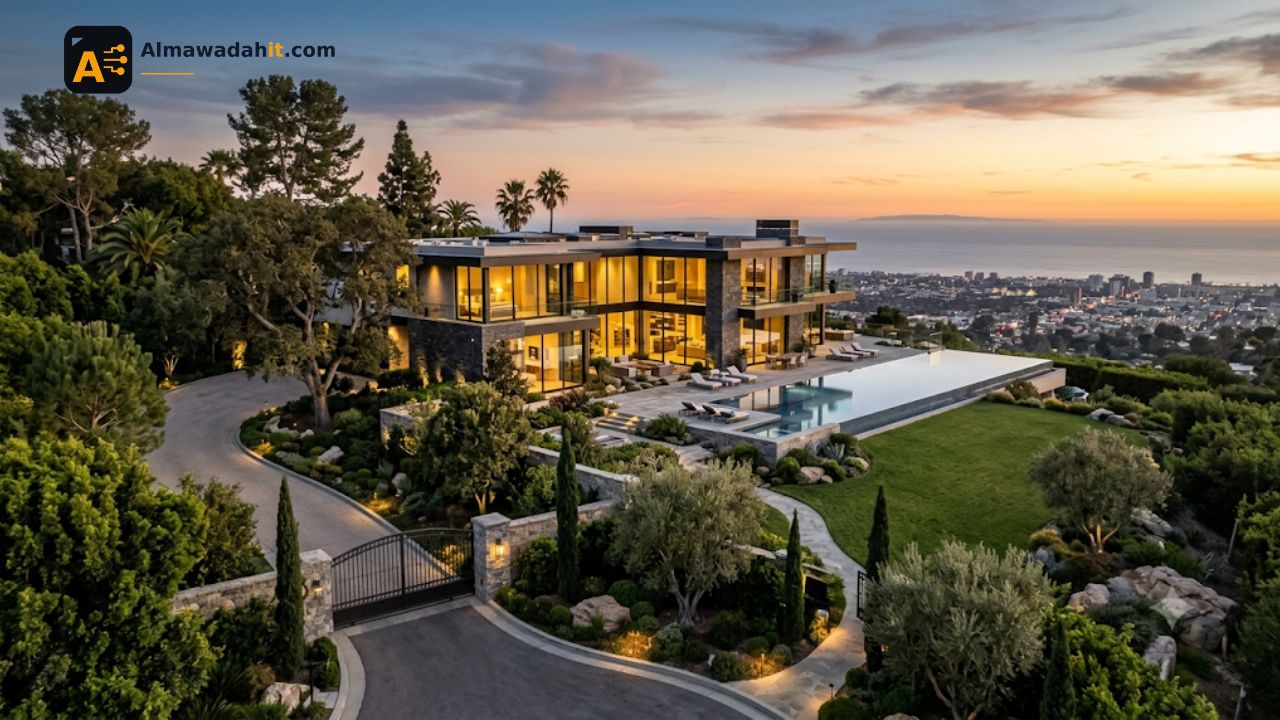
Modern homes in the hills frequently use floor-to-ceiling glass, cantilevered terraces, infinity pools, and open-plan interiors. The architecture turns the skyline into part of the home. At night, city lights become a dramatic backdrop for living rooms, dining areas, and outdoor lounges.
The hills are also closely connected with Los Angeles modernism. The Case Study House program produced some of the city’s most internationally recognized modern residences and explored new uses of industrial materials, open layouts, and indoor-outdoor design.
The trade-off is space and access. A hillside property may have less usable land than an estate in Bel Air, and narrow roads or steep driveways can be challenging. Buyers who value architecture, views, and proximity to creative districts may still consider the Hollywood Hills ideal.
Malibu
Malibu celebrity homes are shaped by the Pacific Ocean. The area offers beachfront houses, cliffside estates, canyon retreats, and modern villas designed to capture water views. Although Malibu is farther from central Los Angeles, many celebrities accept the commute for a quieter coastal lifestyle.
Luxury homes here often focus on light, natural materials, and a direct connection with the landscape. Large windows, ocean-facing decks, open kitchens, and indoor-outdoor living rooms are common. Some properties feel relaxed and minimal, using pale wood, stone, and neutral colors. Others are bold contemporary statements with concrete walls, sculptural staircases, and glass facing the sea.
Privacy depends on location. A gated canyon estate may offer more land, while a beachfront property can place the owner closer to neighboring homes and coastal activity. Buyers therefore choose between direct beach access, elevated views, acreage, and convenience.
Beverly Park and Hidden Hills
For celebrities who prioritize controlled access and large compounds, gated communities can be especially attractive. Beverly Park is one of the best-known examples, with broad streets, large lots, private security, and homes designed on a grand scale.
Properties may include formal arrival courts, multiple garages, guesthouses, staff areas, gardens, sports facilities, and extensive entertainment spaces. Architectural inspiration ranges from French châteaux and Italian villas to modern resorts and classic American estates.
Controlled entry can reduce unwanted traffic, tour buses, and casual visitors. It also helps owners manage arrivals more discreetly. For actors, athletes, executives, and musicians with recognizable public profiles, that separation can matter more than being close to nightlife.
Hidden Hills offers a quieter suburban atmosphere, larger lots, and an equestrian tradition. Its setting feels less urban than Beverly Hills or the Hollywood Hills, which appeals to residents seeking family space and a lower-key routine.
Los Feliz and Hancock Park
Not every celebrity wants a newly built megamansion. Los Feliz and Hancock Park attract buyers who appreciate mature trees, historic architecture, and established neighborhood character.
Los Feliz sits near Griffith Park and contains Spanish Revival homes, Mediterranean residences, hillside modernism, and distinctive architect-designed properties. The neighborhood feels creative and residential while remaining close to Hollywood, Silver Lake, studios, and cultural attractions.
Hancock Park is known for broad streets, generous lots, and stately homes in Tudor Revival, Colonial Revival, Mediterranean, and English country styles. Its luxury comes from craftsmanship, proportion, landscaping, and history rather than extreme elevation or dramatic glass walls.
These areas appeal to buyers who want personality. Original woodwork, tiled courtyards, fireplaces, libraries, formal dining rooms, and established gardens can provide a sense of permanence.
A related example appears in Chaz Dean House: Inside the Los Feliz Oasis, which explores how a Los Feliz residence can combine privacy, greenery, and creative character.
Brentwood and Pacific Palisades
Brentwood and Pacific Palisades have traditionally attracted entertainers, executives, and families who want privacy without feeling completely separated from daily services. These Westside neighborhoods offer access to schools, parks, restaurants, coastal routes, and business centers.
Brentwood includes quiet streets, canyon properties, traditional estates, and modern homes. Its atmosphere is generally more residential and understated than central Beverly Hills.
Pacific Palisades is closer to the coast and has long been associated with ocean views, village-style amenities, and significant modern architecture. Its residential character continues to be influenced by rebuilding, resilience, and updated construction standards.
For celebrity buyers, both neighborhoods can support a family-focused lifestyle while maintaining access to the entertainment industry.
Popular Luxury Architectural Styles
Contemporary Glass Mansions
The contemporary glass mansion is one of the most visible symbols of modern Los Angeles wealth. These homes use large windows, open plans, flat roofs, and minimal interior divisions. Concrete, steel, limestone, wood, and glass are common materials.
Sliding walls may open a living room directly onto a pool deck. Kitchens flow into dining and lounge areas, while floating staircases and double-height spaces create visual drama. This style works particularly well on hillsides, although designers must manage heat, glare, privacy, and structural demands.
Spanish Colonial Revival
Spanish Colonial Revival is one of the city’s most recognizable residential styles. Common features include stucco walls, red clay roof tiles, arched openings, wooden beams, courtyards, decorative ironwork, and patterned tile.
The style feels warm and romantic rather than overly formal. Courtyards create protected outdoor rooms, while shaded openings suit Southern California’s climate. Renovated Spanish homes often preserve their exterior character while adding brighter kitchens, larger bedroom suites, and modern systems.
Mediterranean and Italian-Inspired Villas
Mediterranean villas often emphasize symmetry, formal gardens, stone details, balconies, fountains, and grand entrances. Interiors may include high ceilings, sweeping staircases, marble floors, and large entertaining rooms.
This style is common in Beverly Hills, Bel Air, and gated communities because it suits large lots and resort-style landscaping. Updated villas frequently use lighter materials and simpler interiors to create a more relaxed form of luxury.
Mid-Century Modern
Mid-century modern homes are closely tied to Los Angeles architectural identity. They usually emphasize clean lines, post-and-beam construction, open living areas, natural light, and a strong relationship with the site.
Glass walls, patios, courtyards, and carefully placed rooflines connect the house to trees, hills, or city views. Original examples can be highly desirable because of their architectural history. Sensitive renovations preserve proportions and materials while improving energy efficiency and technology.
Traditional and European-Inspired Estates
Georgian, Tudor, French château, and English country influences appear in neighborhoods with large lots and established streets. These homes may include formal libraries, paneled offices, fireplaces, symmetrical façades, separate dining rooms, and detailed landscaping.
Traditional estates appeal to owners who collect art, host formal events, or prefer rooms with distinct purposes. Their luxury comes through craftsmanship and permanence rather than transparency.
Features Found in Celebrity Homes
The difference between a luxury house and a celebrity-ready residence often comes down to privacy, operation, and lifestyle support.
Security may include controlled gates, cameras, perimeter systems, safe rooms, and private arrival zones. Landscaping is used not only for beauty but also to block views from roads and neighboring properties.
Entertainment features can include screening rooms, music studios, bars, game rooms, wine storage, and large indoor-outdoor gathering areas. Wellness spaces may include gyms, saunas, cold-plunge rooms, massage areas, meditation rooms, and spa-style bathrooms.
Large estates also need behind-the-scenes infrastructure. Service kitchens, staff rooms, delivery entrances, garages, storage, and guest suites allow the property to function without disrupting family spaces.
Smart-home systems can control lighting, climate, curtains, audio, security, pools, and irrigation. The best technology usually disappears into the architecture instead of dominating it.
Privacy Matters More Than Public Display
Celebrity homes are often discussed as symbols of wealth, but their most valuable feature may be the ability to support normal daily life. A private entrance, secure outdoor area, and protected family space can reduce the pressure that comes with public attention.
Responsible celebrity-home coverage should avoid publishing precise addresses, access instructions, security weaknesses, or current occupancy details. Architecture and neighborhood character can be explored without turning a private residence into a visitor destination.
Successful homes create layers of privacy. A gate separates the property from the road. Landscaping protects windows and gardens. Interior layouts keep bedrooms and family rooms away from entertaining areas. Guesthouses and workspaces allow professional activity without opening the entire home.
Which Area Offers the Best Celebrity Lifestyle?
There is no single best neighborhood because each serves a different priority.
Beverly Hills offers recognition, central access, and architectural variety. Bel Air provides estate-scale privacy. Hollywood Hills delivers views and creative energy. Malibu offers the ocean and a slower atmosphere. Beverly Park and Hidden Hills provide controlled access and large compounds. Los Feliz and Hancock Park offer history, while Brentwood and Pacific Palisades support a residential Westside routine.
The right choice depends on how a person works, travels, entertains, and protects private time. A musician may need a studio and late-night city access. An athlete may value a gym, recovery suite, and large grounds. A family may prioritize schools, parks, and separation from tourist routes.
For more articles organized around famous properties, design, and location, visit the Celebrity Homes category on Almawadahit.
Final Thoughts
Celebrity homes in Los Angeles reflect the city itself: dramatic, diverse, creative, and constantly changing. There is no single Hollywood mansion style. Luxury can mean a glass house above the skyline, a Spanish villa around a tiled courtyard, a quiet Bel Air compound, a historic Hancock Park residence, or a Malibu home facing the Pacific.
The most desirable properties combine beauty with practical living. They provide privacy without isolation, entertainment space without sacrificing comfort, and technology without losing architectural character.
Famous neighborhoods attract attention because of their names, but the strongest homes succeed for more lasting reasons. They respond to their landscape, support the owner’s routine, protect personal space, and create a clear sense of identity.
Frequently Asked Questions
Where are most celebrity homes located in Los Angeles?
Many are associated with Beverly Hills, Bel Air, the Hollywood Hills, Malibu, Beverly Park, Hidden Hills, Los Feliz, Brentwood, and Pacific Palisades. The best location depends on privacy, views, lot size, commute, and lifestyle.
What is the most popular style of celebrity home in Los Angeles?
Contemporary glass homes are highly visible, but Spanish Colonial Revival, Mediterranean, mid-century modern, and traditional estates remain important parts of Los Angeles luxury architecture.
Why do celebrities choose gated communities?
Gated communities can provide controlled access, reduced traffic, larger lots, and stronger privacy. These features are useful for residents who receive frequent public attention.
Are all celebrity homes huge mansions?
No. Some celebrities prefer apartments, historic houses, compact hillside homes, or understated family residences. Location, design, and privacy can matter more than total square footage.
What features are common in luxury Los Angeles homes?
Common features include pools, screening rooms, gyms, wellness spaces, guesthouses, smart-home controls, large garages, outdoor kitchens, security systems, and landscaped privacy barriers.
Can tourists visit celebrity homes?
Most celebrity homes are private residences and should not be entered or approached. Visitors can explore public streets, architecture tours, museums, and historic houses while respecting residents’ privacy.